EN
 FR
 DE
 RU
 ES
 PT
 AR
 JA

Choosing the right eco-friendly kitchenware requires a balance between durability, product performance, environmental impact, and purchasing cost.
For wholesalers, importers, restaurant suppliers, and private-label brands, the lowest unit price does not always mean the lowest long-term cost. Material quality, product thickness, surface finishing, maintenance, and replacement frequency can all affect the overall value of kitchenware products.
In this guide, we explore how buyers can compare sustainable kitchenware materials and make practical sourcing decisions, with a particular focus on stainless steel kitchenware.
What Makes Eco-Friendly Kitchenware Durable and Sustainable?
Environmentally friendly materials refer to materials that have less impact on the environment, lower resource consumption, and are easier to recycle, degrade, or reuse in the whole life cycle. Their purpose of use is to reduce pollution, save resources, and promote sustainable development.
The characteristics of common environmentally friendly materials
Stainless steel: 100% recyclable, durable for over ten years, free of harmful substances, environmentally friendly, and durable
Glass: Recyclable, reusable, non-toxic, suitable for food contact containers, but prone to damage
Bamboo/Wood: Derived from renewable resources, biodegradable, only suitable for single-use or short-term use products
Sugarcane residue: Made from the residue left after sugarcane juice extraction, it is degradable and compostable, and is widely used in eco-friendly dinner plates, lunch boxes, etc. It is only suitable for disposable or short-term use products
PLA (Polylactic acid): Plant-based, industrially compostable and degradable, commonly used in disposable products such as straws and cup LIDS
Materials made from pulp molding and paper waste: degradable and compostable, they are often used for food packaging and are only suitable for single-use or short-term products.
Based on the above materials, we have concluded that stainless steel is the most environmentally friendly and durable.
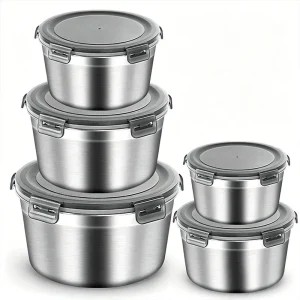
Meanwhile, stainless steel kitchenware is also one of the most popular and mature categories today, widely used in various life and commercial scenarios. For example, common ones such as bowls, serving plates, basins, spoons, chopsticks, forks, food storage containers, etc. With its advantages of being environmentally friendly, safe, durable, and easy to clean, stainless steel kitchenware has become the preferred solution for an increasing number of catering brands, e-commerce platforms, and institutional purchasers when promoting sustainable procurement.
The performance of stainless steel kitchenware
As a high-performance and low-environmental-burden material, it is one of the most reliable materials for achieving sustainable procurement goals at present. For purchasers who attach great importance to product durability, safety, and brand environmental responsibility, choosing stainless steel kitchenware means choosing long-term sustainable value. The following are the performance advantages of stainless steel kitchenware:
1.It has strong corrosion resistance, durability, and a long service life
It contains chromium (usually ≥10.5%), and the surface can automatically form a dense passivation film, effectively preventing oxidation and rusting
It has extremely strong anti-drop, anti-pressure, and anti-scratch capabilities, is not easy to break or deform, and its service life can reach 5 to 10 years or even longer
Significantly reduce the replacement frequency and lower the long-term procurement and operation costs
2. Food-Contact Safety and Material Selection
Stainless steel grades such as 304 are widely used in food-contact kitchenware due to their corrosion resistance and durability.
However, food-contact suitability depends on the finished product, its intended use, and applicable market regulations. Buyers should request relevant material specifications and test reports when sourcing kitchenware for different countries.
For European markets, food-contact kitchenware must comply with applicable EU requirements, including Regulation (EC) No 1935/2004.
When sourcing kitchenware for European markets, buyers should review the applicable EU food-contact material requirements and request appropriate product documentation from suppliers.
3. Heat Resistance and Product Compatibility
Stainless steel is known for its heat resistance, but the temperature limits and heating compatibility of finished kitchenware depend on product construction.
Cooking pots, mixing bowls, food containers, and serving trays may have different requirements. Buyers should confirm whether a specific model is suitable for direct heating, induction cooking, oven use, or dishwasher cleaning before making product claims.
4.100% recyclable, reusable, and pollution-free
Stainless steel is an environmentally friendly metal that can be recycled and reused an unlimited number of times
No harmful substances are produced during the recycling process, with a low carbon footprint and high energy efficiency
5. Easy to clean and compatible with modern kitchen equipment
The surface is smooth and clean, not prone to bacterial growth, and convenient for high-temperature and high-pressure disinfection
It can be applied to dishwashers, high-temperature disinfection cabinets, and commercial cleaning systems, significantly reducing the cost of manual cleaning
6. It has a wide range of applications, diverse styles, and supports customization
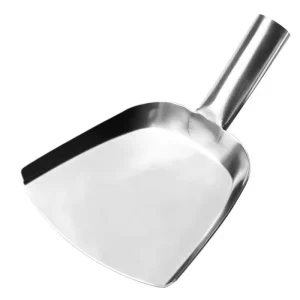
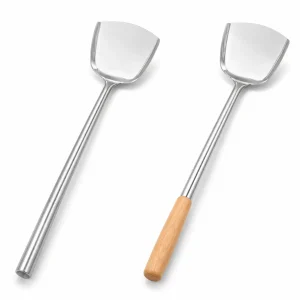
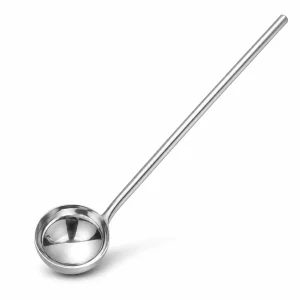
It can be widely applied to cookware, bowls, plates, basins, chopsticks, spoons, forks, lunch boxes, thermos flasks, trays, etc
It applies to various scenarios such as families, restaurants, schools, hospitals, canteens, fast food chains, etc
Support customization of logos with different processes, including various polishing techniques (brushed, mirror finish, sandblasting)
How to control cost?
1)Material
Under the premise of controlling costs, it is crucial to make a reasonable selection of stainless steel materials. Common stainless steel materials include SS 410, SS 201, SS 304 and SS 316, each with its own emphasis in terms of performance and price:
SS 410: It has the lowest price, is magnetic, has relatively high hardness, but is prone to rust. It is suitable for products with low requirements for anti-corrosion.
SS 201: It has a moderate cost, is non-magnetic, and has average corrosion resistance. It is suitable for products that do not come into direct contact with food, such as trays and tool racks.
SS 304: It belongs to food-grade stainless steel, is non-magnetic, and has excellent corrosion resistance. It is widely used in tableware and cookware that come into direct contact with food and is the mainstream choice for kitchenware.
SS 316: It has the highest price and extremely strong corrosion resistance. It is suitable for special environments such as high salt and high acid, and is often used in medical equipment or high-end custom kitchenware.
In actual procurement, materials should be selected reasonably based on the product’s application, usage environment, and budget. One should not blindly pursue high grades but rather seek solutions with the best cost performance, so as to effectively control costs while ensuring product performance.
2)Thickness
The thickness of stainless steel kitchenware not only determines the durability and hand feel of the product, but also directly affects its production difficulty and manufacturing cost. In actual production, the appropriate thickness should be selected based on the structural height, application scenarios and functional requirements of the product, so as to control costs while ensuring performance.
Thickness: 0.4mm – 0.5mm
It belongs to a lightweight thickness and is not suitable for products with a high stretching height. It is suitable for making small and low-depth kitchenware. It is commonly used in portable food storage containers, flat bottoms, rice bowls, mugs, and other daily products, and has the advantages of low cost, easy molding, and convenient transportation.
Thickness: 0.6mm – 0.8mm
It belongs to medium thickness and can meet the production requirements of medium and high depth stretching. It is more suitable for products with certain requirements for structural strength, such as salad bowls, woks, GN pans, etc. Products in this thickness range strike a good balance between durability and cost performance, making them a mainstream choice for commercial use.
Thickness above 0.8mm:
It belongs to heavy-duty structures and is mainly used for products with special requirements for deformation resistance, impact resistance and structural stability, such as industrial barrels, large soup pots, heavy-duty dinner plates, or high-end custom kitchenware. Although it is more expensive, it is suitable for high-intensity and high-frequency usage environments and has a longer service life.
In practical applications, through process optimization (such as flanging, reinforcing ribs, embossing design, etc.), the strength and structural stability of the product can be enhanced without significantly increasing the thickness, further controlling the cost.
3)Surface
The surface treatment of stainless steel kitchenware not only affects the aesthetic appearance and hand feel of the product, but also, to a certain extent, determines its anti-corrosion performance and manufacturing cost. Based on the usage scenarios, customer positioning, and budget, choosing the appropriate surface treatment process can achieve a comprehensive balance of visual effect, functionality, and cost.
Polishing process (sanding, polishing/mirror polishing)
Feature: Bright polishing makes the surface shiny. The brighter it is, the higher the cost. Sanding and polishing give the surface a high-end texture, and the brushing process is more costly
Applicable: serving plates, pot, spoons, cups, etc.
Suggestion: Choose the fineness of the polishing process based on the budget. For mid-to-high-end products, polishing requires a better texture. For products with high cost performance, the polishing process only needs to meet the ordinary aesthetic requirements
2. Electrolytic treatment
Features: The surface is treated by electrochemical principles to make it smoother, more corrosion-resistant, and easier to clean.
Applicable to medical-grade or high-hygiene products, such as insulated boxes, food storage containers, commercial cookware, etc.
Suggestion: It can be used for high-standard products that pursue functionality rather than visual effects.
3. Electroplating processes (titanium gold, electroplated black, colored electroplating)
Features: Achieve decorative colors such as gold, black, and rose gold to enhance the grade.
Applicable: Gift tableware, high-end custom tableware.
Suggestion: The cost is significantly higher than that of other processes. The more special the color and the more complex the process, the higher the cost. In the absence of special requirements, choosing common colors will offer more favorable prices
Smart Ways to Reduce Eco-Friendly Kitchenware Costs
For wholesale buyers, the real cost of kitchenware goes beyond the initial purchase price. Here are five practical ways to balance performance, sustainability, and budget.
1. Choose the Right Material Grade: Compare 201, 304, and other stainless steel grades according to intended use, corrosion resistance, and applicable food-contact requirements.
2. Optimize Product Thickness: Choose suitable thickness according to product dimensions, forming requirements, and expected usage conditions. Thicker material is not always necessary for every application.
3. Select Practical Surface Finishes: Mirror polishing, brushing, and decorative finishes can affect appearance and manufacturing costs. Choose finishes that match your target market.
4. Consider Long-Term Replacement Costs: Durable, reusable products may offer better long-term value by reducing replacement frequency, depending on actual service life and maintenance.
5. Plan Bulk Orders and Customization: Coordinate order quantities, product specifications, packaging, and OEM/ODM requirements with your manufacturer to reduce avoidable production complexity.
For example, a product that costs $4 and lasts four years has a simple annual purchase cost of $1, while a $3 product replaced every year costs $3 per year. These are illustrative figures, not actual quotations.
Evaluating eco-friendly kitchenware through total cost of ownership helps buyers make more informed decisions rather than focusing only on the lowest unit price.
Sustainable & brand value improvement
Many purchasers only focus on the unit price and ignore “reusability” or “brand premium”. In the European and American markets, many high-end brands have included “metal reusable tableware” as standard equipment. Consumers are increasingly recognizing sustainable brands, and stainless steel products are more conducive to establishing a green image. Through customized services (LOGO printing, laser engraving, and individual packaging), stainless steel tableware can also contribute to brand promotion.
CONTACT US
If you are looking for a truly sustainable and reliable stainless steel kitchenware product, we sincerely welcome you to contact us. We will offer you professional advice, customized solutions, and stable supply guarantees to support your green transformation journey.